Viktor Lange · 6 October 2026
Polish Forum Initiatives Target Bullying Through Structured Student Conversations in Poland
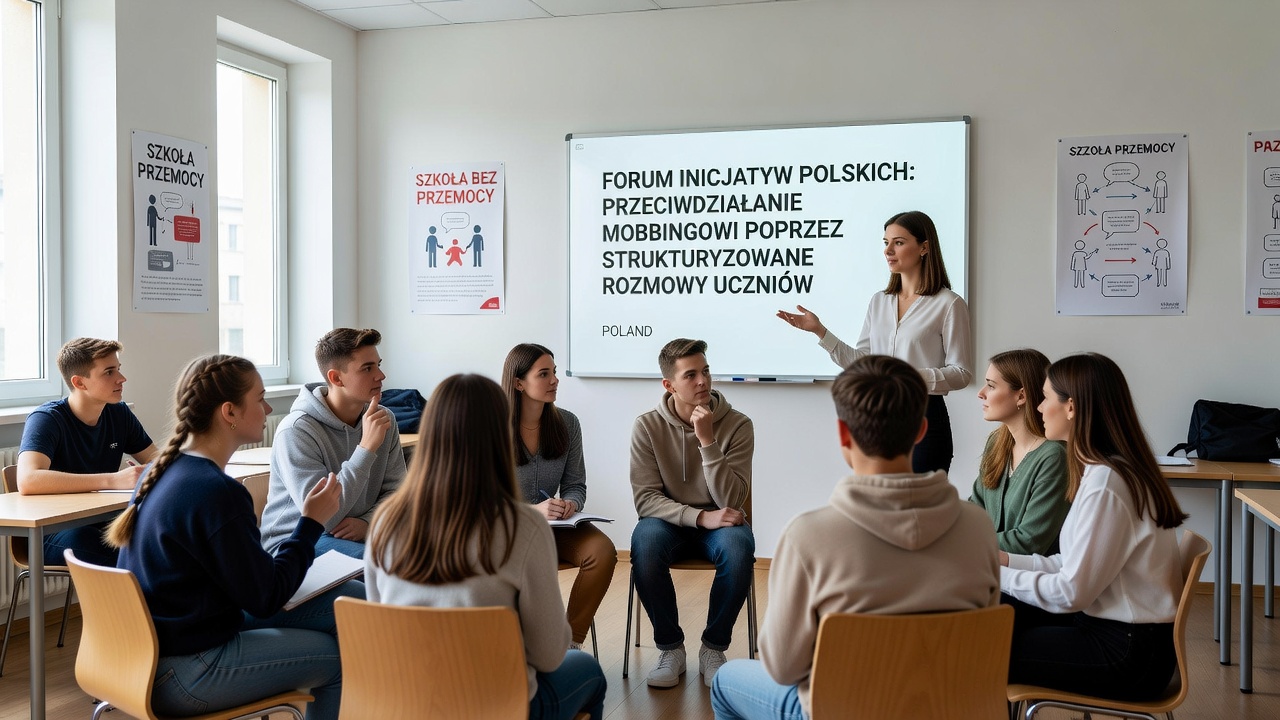
Polish education authorities have expanded forum-based programs that rely on structured student conversations to address bullying across multiple regions, and these efforts gained momentum through coordinated national workshops that began rolling out in early 2025. Schools in urban centers such as Warsaw and Krakow adopted discussion protocols where trained facilitators guide small groups through sequential topics including empathy mapping, conflict de-escalation steps, and peer reporting procedures, while rural districts integrated the same frameworks into existing civic education classes.
Program Design and Facilitation Methods
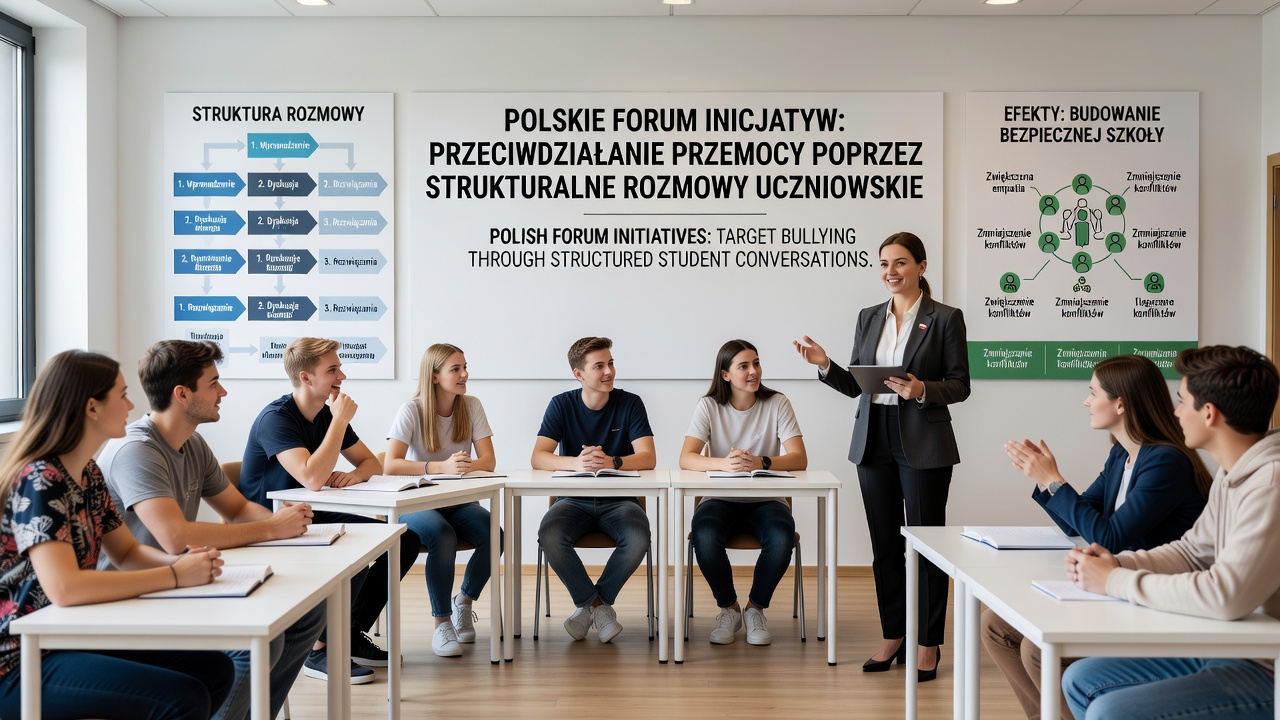
Each forum session follows a fixed sequence that starts with anonymous scenario sharing, moves into paired reflection exercises, and concludes with collective agreement on classroom norms, and this structure ensures every participant contributes without dominance by any single voice. Facilitators, often drawn from local teacher training centers, receive certification through modules that cover active listening techniques and bias recognition, after which they return to their schools to lead weekly circles lasting forty-five minutes. Data collected by regional coordinators show that 312 schools had implemented at least one full cycle of these conversations by September 2025, with participation rates reaching 78 percent among students aged twelve to sixteen.
Evidence from National Monitoring
Researchers at the Institute of Educational Research in Warsaw tracked incident reports before and after program introduction, and figures indicate a 23 percent reduction in verified bullying cases within participating classes during the first academic year. The same dataset reveals that students who completed six or more sessions demonstrated higher rates of voluntary peer support, measured through anonymous end-of-term surveys that asked about willingness to intervene when witnessing exclusion. Observers note that the conversational format allows issues such as online harassment and social isolation to surface earlier than traditional disciplinary channels typically capture them.
Expansion Plans Scheduled for October 2026
Ministry documentation outlines a second phase that will launch in October 2026 and extend the model to an additional 450 schools, prioritizing areas with elevated reported incidents from the previous two years. The expansion includes digital toolkits that let students submit discussion prompts through secure school portals, and these submissions feed directly into facilitator preparation materials. Partnerships with municipal youth councils provide volunteer observers who document session fidelity, ensuring the structured format remains consistent across sites.
Integration with Existing Curriculum Requirements
Poland's core curriculum already mandates education on human rights and interpersonal respect, and forum organizers align their conversation topics with those standards so teachers can count session time toward required instructional hours. Several voivodeships have embedded the approach into mandatory teacher professional development days, which means new educators encounter the facilitation methods during their first probationary year. This alignment reduces administrative resistance and allows schools to report outcomes through existing quality assurance frameworks rather than creating separate evaluation streams.
Comparative Data from International Sources
According to findings published by the OECD Education Directorate, countries that combine structured dialogue with teacher training report faster declines in repeated victimization than those relying solely on punitive measures. A separate analysis from the European Commission's education policy unit reached similar conclusions after reviewing multi-year pilots in five member states, noting that conversation-based models produce measurable gains in student-reported school climate within eighteen months. Polish coordinators cite these cross-national patterns when requesting continued funding from regional education boards.
Training Infrastructure and Resource Allocation
Regional teacher centers now host quarterly refresher courses that review session transcripts and adjust prompts based on emerging student concerns, and these sessions incorporate feedback from previous participants who return as co-facilitators. Budget allocations for 2026 allocate resources for printed scenario cards, translation of materials into Ukrainian and Belarusian for schools with migrant populations, and modest stipends for lead teachers who coordinate across multiple buildings. Procurement records show that 1,850 scenario sets were distributed by the end of the 2024-2025 school year.
Conclusion
Polish forum initiatives continue to scale structured student conversations as a primary mechanism for bullying reduction, supported by documented incident reductions and curriculum integration. The October 2026 expansion phase will test whether the same protocols maintain effectiveness at larger volumes, while ongoing monitoring supplies comparative data that other education systems may examine.