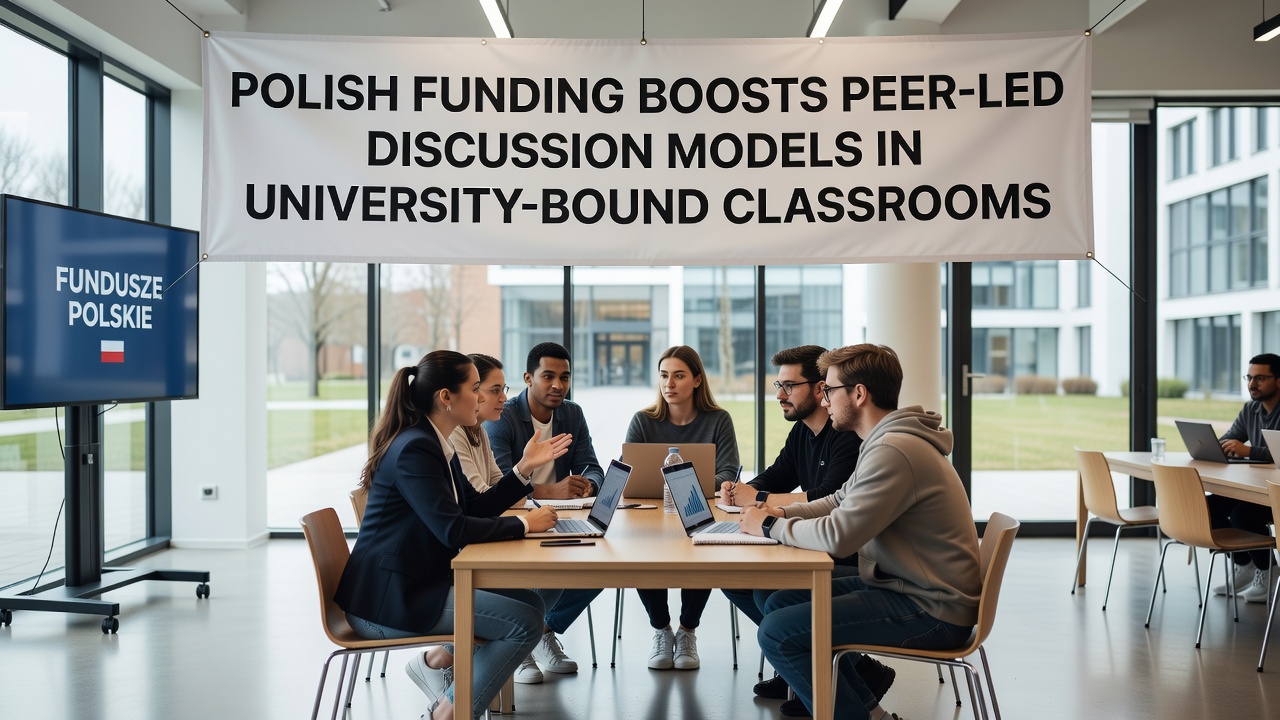
Harper Hoffmann · 20 October 2026
Polish Funding Boosts Peer-Led Discussion Models in University-Bound Classrooms
The Polish Ministry of Education allocated substantial resources in 2025 to expand peer-led discussion frameworks across secondary schools, and these programs target students on university tracks by emphasizing structured conversations that mirror academic seminars, while data from initial rollouts show measurable gains in critical thinking metrics according to internal evaluations shared with regional education boards. Funding supports teacher training sessions, student facilitator certification, and classroom technology upgrades that enable real-time collaboration tools, yet the approach integrates existing curriculum requirements rather than replacing them outright.
Funding Origins and Allocation Details
European Union structural funds combined with national budget contributions formed the core of this initiative, and allocations reached over 45 million PLN by mid-2026 for schools in both urban and regional districts, while priority went to institutions with high percentages of students applying to competitive university programs. The rollout timeline includes pilot expansions scheduled for October 2026 in select voivodeships, where coordinators plan to track participation rates and discussion quality indicators through standardized rubrics developed in partnership with academic researchers.
Schools receive grants based on enrollment numbers and demonstrated need for discussion skill development, adn administrators must submit quarterly reports that detail session frequency along with student feedback summaries. This structure draws from earlier vocational training models that proved effective in other sectors, but adapts them specifically for humanities and social science preparation tracks.
Classroom Implementation Patterns
Peer facilitators, often upper-year students who complete a short certification course, lead weekly groups of eight to twelve participants through guided topics drawn from literature, history, and current events, and these sessions last forty-five minutes with rotating roles that encourage every member to practice moderation and evidence citation. Teachers observe rather than direct, stepping in only when clarification on facts becomes necessary, while digital platforms log participation data for later analysis by school improvement teams.
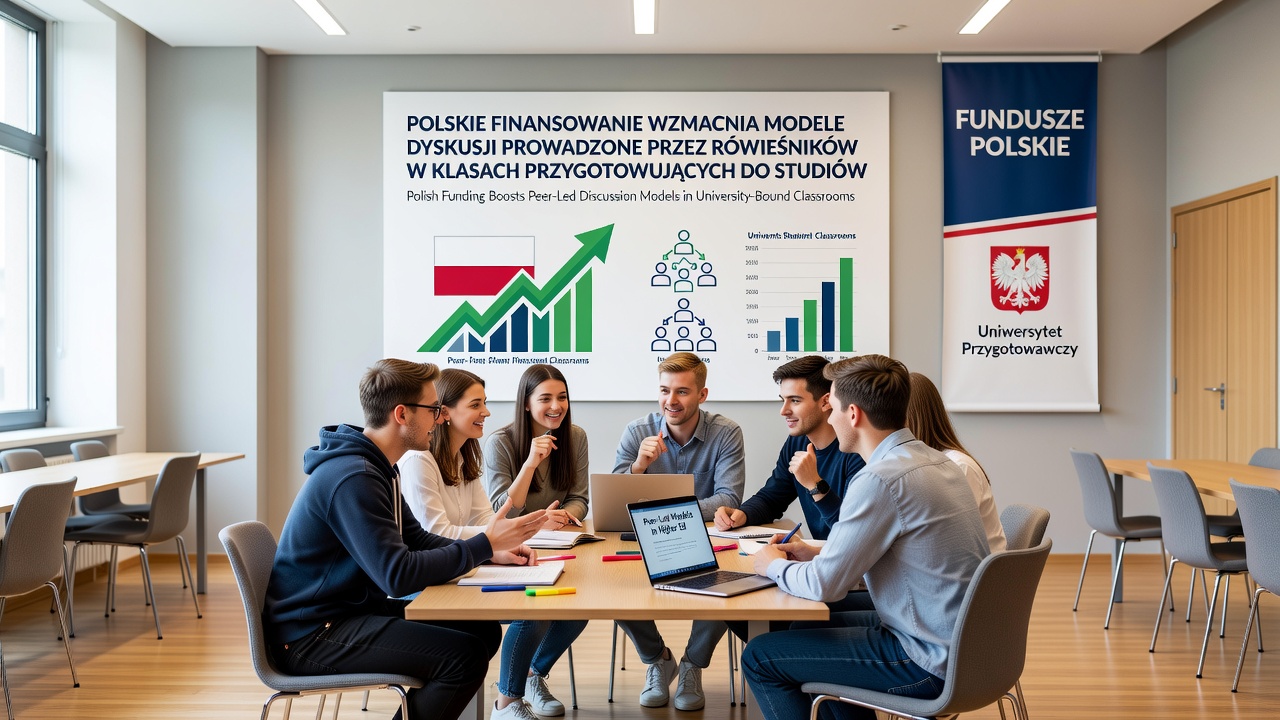
One Warsaw lyceum integrated the model into its existing debate club structure last spring, and results indicated a 22 percent rise in student self-reported confidence for university-style presentations according to post-program surveys collected by the school. Similar patterns appear in Kraków and Gdańsk locations where coordinators adapted the framework to bilingual classrooms serving international track students, and the method emphasizes evidence-based arguments over opinion sharing.
Observed Outcomes and Supporting Data
Research conducted by the Polish Educational Research Institute tracked 1,200 participants across twelve schools during the first year, and preliminary figures reveal improved performance on standardized critical reasoning assessments compared to control groups that continued with traditional lecture formats. Attendance in voluntary discussion sessions averaged 78 percent among targeted university-bound cohorts, while qualitative notes from facilitators highlight increased willingness among quieter students to contribute after three or four meetings.
International comparisons come from OECD education indicators that place Poland's secondary discussion practices below several peer nations in student agency measures, and program designers referenced those benchmarks when shaping grant criteria. Australian studies on collaborative learning informed some of the evaluation tools, yet local adaptations account for Poland's centralized curriculum constraints and varying class sizes.
Regional Variations and Expansion Plans
Northern provinces with smaller class sizes report faster adoption rates because logistics allow more frequent meetings, whereas southern industrial areas focus resources on after-school formats to accommodate students with part-time jobs. Coordinators in both settings note that parent information sessions held in spring 2026 helped clarify expectations and reduced initial resistance from families accustomed to more teacher-centered approaches.
Plans call for a national database of discussion prompts aligned with university entrance exam themes, and developers expect to release the first modules before the October 2026 checkpoint. Partnerships with university education departments supply ongoing mentor support for new facilitators, creating a pipeline that connects secondary experiences directly to higher education environments.
Conclusion
Polish funding has established a structured pathway for peer-led discussion models that prepares university-bound students through repeated practice in facilitated groups, and ongoing data collection through 2027 will determine whether these investments produce sustained improvements in academic readiness indicators. Schools continue to refine session formats based on feedback loops that involve both participants and external evaluators, while the overall framework maintains alignment with national education standards and EU reporting requirements.