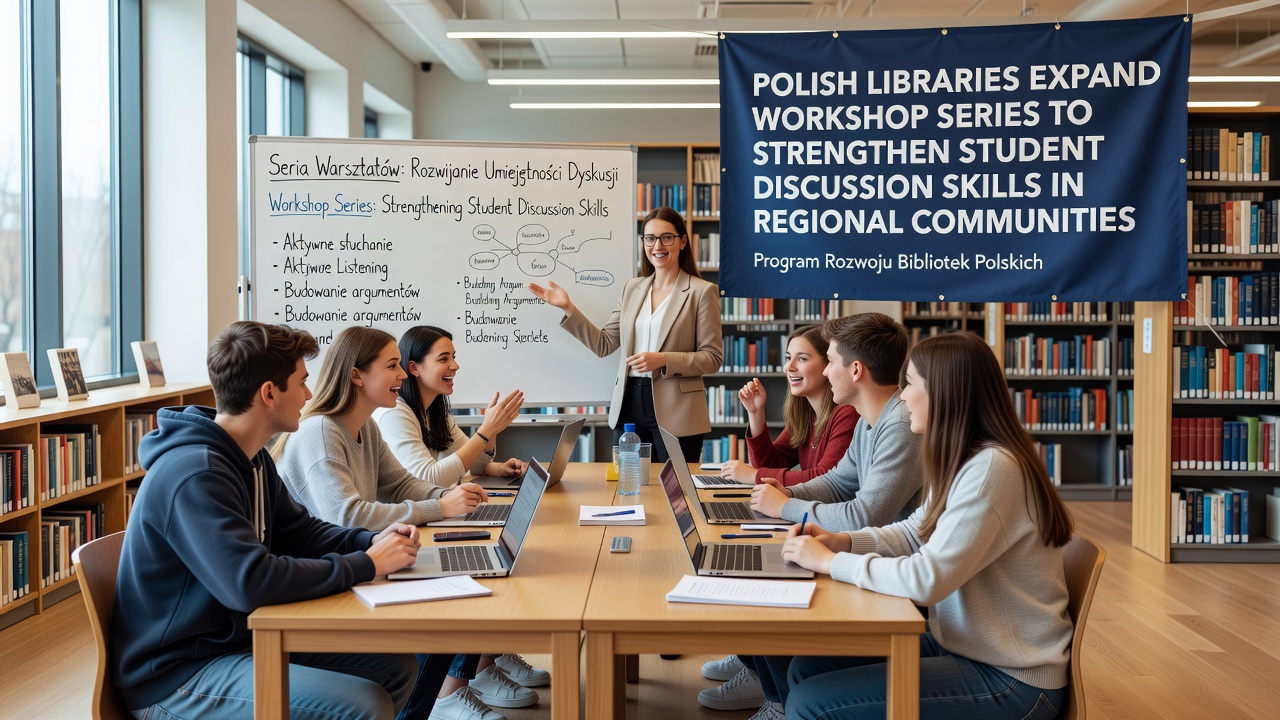
Harper Otto · 8 September 2026
Polish Libraries Expand Workshop Series to Strengthen Student Discussion Skills in Regional Communities
Polish libraries have launched an expanded workshop series aimed at building student discussion skills across regional communities, with new sessions scheduled to begin in September 2026. The initiative draws on existing library networks in smaller towns and rural areas where access to structured communication training remains limited, and program coordinators report that the series will run through local branches of the National Library of Poland system along with partnerships at municipal facilities.
Program Background and Scope
Regional libraries in Poland have offered discussion-based activities for years, yet recent expansions target secondary school students specifically through weekly sessions that focus on structured debate formats, active listening techniques, and evidence-based argumentation. Data from the Polish Ministry of Culture and National Heritage shows that participation in similar programs grew by 28 percent between 2022 and 2025, with the largest increases recorded in the Podlaskie and Lubelskie voivodeships. Librarians note that the new series incorporates feedback from earlier pilots where students practiced moderating small-group conversations on local history topics and contemporary issues.
Coordinators at the regional level have adapted materials originally developed for urban centers, adjusting session lengths to fit after-school schedules while maintaining a core curriculum that emphasizes turn-taking protocols and respectful disagreement. One librarian in a town near Białystok described how the workshops integrate short readings from regional archives before moving into facilitated exchanges, allowing participants to ground opinions in documented sources rather than general impressions.
Workshop Structure and Delivery Methods
Each workshop cycle spans eight weeks and combines in-person meetings with optional online follow-up resources hosted on library platforms. Facilitators introduce concepts such as claim-evidence-reasoning frameworks during the first two sessions, then shift toward student-led segments where groups of four to six participants rotate roles as speakers, note-takers, and summarizers. Training materials include translated excerpts from European Commission education guidelines on civic competencies, which stress the value of dialogue skills in democratic participation.
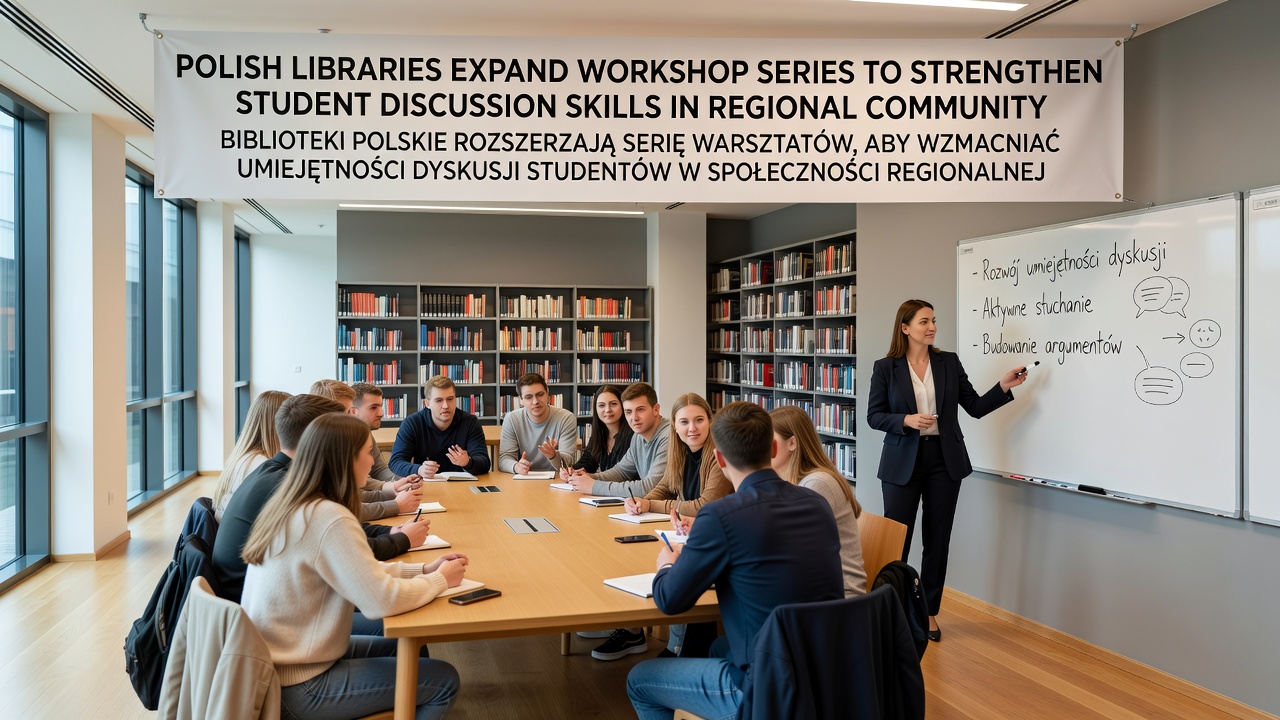
Library staff receive preparatory training through regional centers that cover both pedagogical techniques and basic conflict de-escalation strategies. Sessions conclude with reflective writing prompts that ask students to evaluate their own contributions and identify areas for improvement, creating a documented progression that participants can review with teachers or parents. According to figures released by the Institute for Educational Research in Warsaw, programs with similar reflection components showed measurable gains in student self-reported confidence when speaking in groups.
Regional Reach and Community Involvement
The expansion targets libraries in communities with populations under 50,000, where school curricula often prioritize written assignments over oral practice. Partnerships with local secondary schools allow teachers to integrate workshop attendance into optional credit activities, and several municipalities have arranged transportation support for students traveling from surrounding villages. Reports from the 2025 pilot phase indicated that 62 percent of participants came from households where neither parent held a university degree, highlighting the program's reach beyond traditional educational support networks.
Community organizations such as parent councils and youth clubs have contributed topic suggestions drawn from local concerns, including environmental changes in agricultural areas and preservation of regional dialects. These inputs help keep discussions relevant while aligning with broader objectives outlined in European Commission education frameworks that promote inclusive dialogue practices. Observers note that the involvement of external groups has also increased foot traffic at participating libraries during non-workshop hours.
Measurement and Ongoing Adjustments
Program evaluators track progress through pre- and post-session assessments that measure skills such as the ability to cite sources accurately and the frequency of interrupting behaviors. Early results compiled by the National Library of Poland indicate that average scores on structured discussion rubrics rose by 19 percent after the first full cycle in test locations. Adjustments planned for the September 2026 rollout include additional multilingual resources for communities with higher percentages of Ukrainian-speaking families, reflecting demographic shifts documented in recent census updates.
Library administrators coordinate with researchers at the University of Warsaw to refine evaluation tools, ensuring that metrics capture both individual growth and group dynamics. Data collection occurs through anonymous forms that protect student privacy while still allowing aggregate analysis of trends across different voivodeships.
Conclusion
The expanded workshop series represents a continuation of library efforts to address communication skill gaps in regional settings, with implementation details shaped by prior participation data and community input. Sessions beginning in September 2026 will follow established structures while incorporating targeted adaptations for local demographics. Ongoing monitoring by the National Library of Poland and partner institutions will provide further figures on reach and skill development as the program proceeds.